
Most people expect their tap water to be clear, fresh, and ready to use. We drink it, cook with it, wash our clothes in it, and rely on it for countless everyday tasks. So, when water tastes strange, leaves marks on the sink, or smells a little different, it’s natural to wonder what’s going on.
Water quality issues aren’t always dramatic. Sometimes, the signs are small: a showerhead that keeps clogging, a glass that looks cloudy after washing, or water that leaves your skin feeling unusually dry. These clues can point toward common concerns such as mineral content, particles, or disinfectants. Understanding the differences can help homeowners choose practical treatment options instead of spending money on equipment that doesn’t address the real problem.
Why Water Quality Can Vary From One Home to Another
Water quality depends on several factors, including the original water source, local geology, municipal treatment processes, and the condition of the plumbing. Two homes in the same town may even experience slightly different water conditions because of differences in pipe materials, building age, or water usage.
Municipal water is treated to meet regulatory requirements, but treatment does not mean every person will love its taste or texture. Private well water, meanwhile, can be influenced by groundwater conditions and may contain minerals, organic matter, or naturally occurring substances that require testing.
The first step in dealing with a water-quality concern is identifying what is actually present. Guessing based on appearance or taste can be misleading. A proper water test provides a more reliable foundation for choosing treatment.
The Everyday Effects of Hard Water
One of the most common household water concerns is hard water, which contains elevated levels of calcium and magnesium. These minerals are naturally occurring and generally aren’t considered a direct health risk, but they can create frustrating problems around the home.
Hard water often leaves white or chalky deposits on faucets, shower doors, sinks, and dishes. Soap may not lather as easily, and laundry can feel stiff or look less vibrant. Over time, scale may build up inside water heaters, pipes, coffee machines, dishwashers, and washing machines.
For many households, the biggest issue is not the water itself but the maintenance it creates. Homeowners may find themselves cleaning fixtures more often or replacing appliances sooner than expected.
Water softeners are commonly used to reduce hardness minerals. They can improve the feel of water, reduce scale, and make cleaning easier. However, the right system depends on the actual hardness level and the household’s preferences regarding maintenance, salt use, and operating costs.
What Sediment Means for Your Water
Another concern is sediment, which refers to small particles that may enter the water supply. These particles can include sand, silt, rust, dirt, or other suspended material. Sediment is especially common in private well systems, although municipal water supplies can also experience particles due to pipe work, infrastructure issues, or disturbances in the distribution network.
Sediment may appear as cloudy water, visible particles at the bottom of a glass, or discoloration after a plumbing repair. Even when the particles are not immediately dangerous, they can be hard on faucets, washing machines, water heaters, and other equipment.
A sediment filter is designed to capture these physical particles before they move further into the plumbing system. Some filters are installed at the main water entry point, while others are used for specific appliances or drinking-water lines.
The filter type and micron rating matter. A filter that is too coarse may allow smaller particles through, while one that is too fine may clog quickly if the water contains a heavy sediment load. That’s why testing and professional assessment are helpful before installation.
Understanding Chlorine in Drinking Water
Municipal water providers often use chlorine or related disinfectants to control harmful microorganisms and keep water safer as it travels through distribution pipes. Disinfection is an important part of public water treatment, but chlorine can affect the taste and smell of water.
Some people notice a swimming-pool-like odor, especially when filling a glass or taking a shower. Others may find that chlorine changes the flavor of coffee, tea, or food prepared with tap water. In certain situations, the smell may become more noticeable after water has been sitting in plumbing for a while.
Activated carbon filters are commonly used to reduce chlorine taste and odor. These filters work by allowing water to pass through carbon media that adsorbs certain compounds. Carbon filtration may also improve the overall sensory quality of water, although performance depends on the filter design, contact time, water flow, and replacement schedule.
It’s important to remember that chlorine serves a public-health purpose in treated water. The goal of filtration is not necessarily to remove every trace without consideration, but to improve taste and odor while using a properly maintained system.
Choosing the Right Treatment Method
Different water problems call for different solutions. A softener may be appropriate for hardness, but it won’t necessarily remove sediment or chlorine taste. Likewise, a carbon filter may improve odor but won’t solve scale caused by calcium and magnesium.
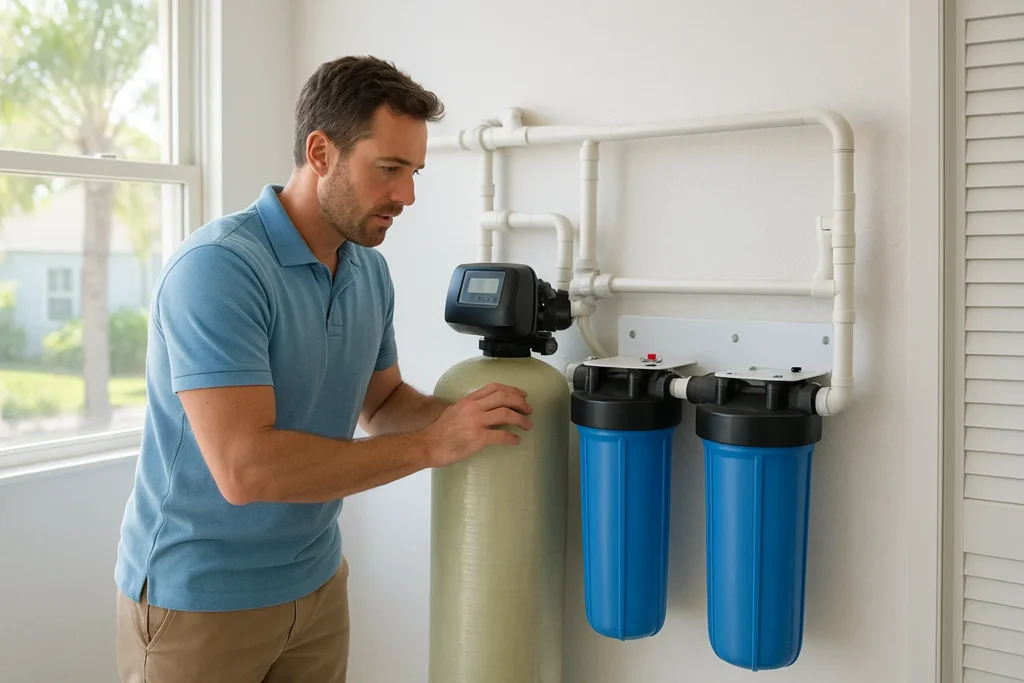
Common treatment options include:
- Sediment filters: Designed to capture sand, rust, dirt, and suspended particles.
- Activated carbon filters: Often used to reduce chlorine taste, odors, and selected organic compounds.
- Water softeners: Used to reduce hardness minerals and control scale.
- Reverse osmosis systems: Commonly installed for drinking and cooking water to reduce many dissolved substances.
- Ultraviolet systems: Used in certain applications to help control microorganisms, particularly in private well settings.
- Specialized filtration systems: Designed for specific contaminants identified through testing.
The best system is not necessarily the one with the longest feature list. It is the one that addresses the actual water conditions in a reliable and affordable way.
Why Testing and Maintenance Matter
A water test can help identify hardness, pH, iron, manganese, chlorine-related concerns, bacteria, and other characteristics depending on the testing package. Testing is especially important for well owners, people noticing sudden changes, and households considering a major treatment investment.
Once a system is installed, maintenance becomes part of the process. Filters need replacement, softeners require servicing or salt, and treatment equipment should be checked according to the manufacturer’s recommendations. A neglected system may lose effectiveness and can create additional problems.
Before purchasing equipment, ask about operating costs, filter availability, warranty terms, installation requirements, and service support. These practical details matter just as much as the initial price.
A Clearer Path to Better Water
Water-quality concerns can feel confusing because several different issues may produce similar symptoms. Cloudy water, unpleasant taste, scale, and odors each have possible causes, and treating the wrong problem can waste both time and money.
The smartest approach is to start with information. Test the water, identify the specific concern, and choose a treatment method designed for that issue. Whether the goal is reducing mineral buildup, capturing particles, or improving taste, a properly selected and maintained system can make everyday water use more comfortable.
Better water doesn’t always require the most complicated technology. Often, it begins with paying attention, asking the right questions, and choosing a solution that fits the home rather than chasing a universal fix.