
There’s nothing quite like cleaning the bathroom on a Saturday morning, only to find those stubborn white deposits returning a few days later. The showerhead looks worn, the kettle needs descaling again, and your freshly washed towels feel surprisingly rough. It might seem like a collection of unrelated household annoyances, but hard water could be the common culprit.
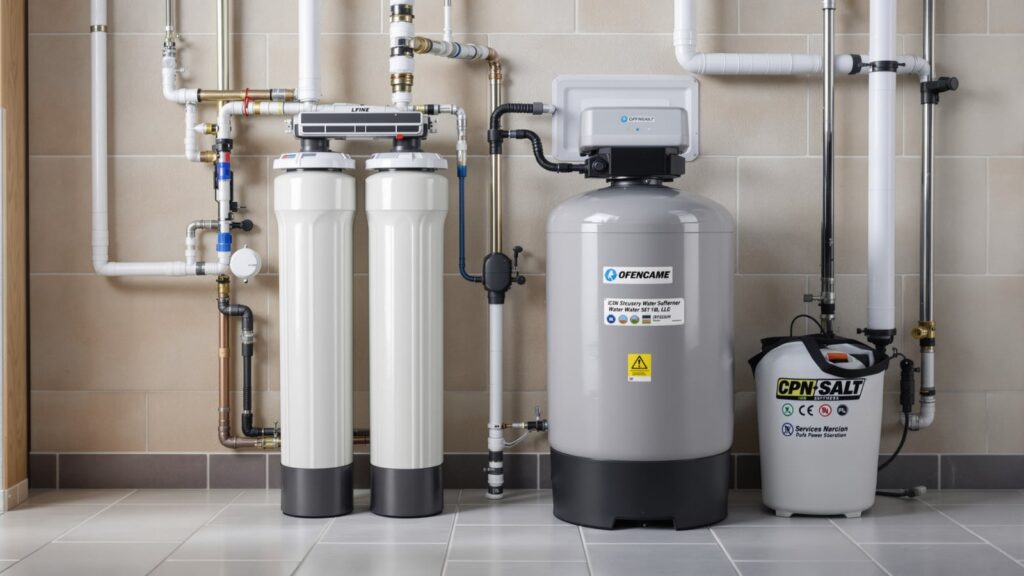
Modern water softener systems offer a practical way to reduce excessive mineral concentrations and address many of the frustrations associated with household water hardness.
For homeowners in Burton, understanding how softening works can make choosing suitable treatment equipment much easier. And while installing a softener requires an initial investment, the everyday benefits can make it a worthwhile consideration.
Recognizing the Signs of Hard Water Around Your Home
Hard water contains elevated concentrations of dissolved calcium and magnesium. These minerals occur naturally as water moves through underground rock and soil.
Although hardness doesn’t automatically make water unsafe to drink, it can make household maintenance considerably more demanding.
Common hard water problems include chalky deposits around faucets, cloudy glassware, poor soap lather, and mineral accumulation inside appliances that regularly heat water.
Sometimes, these issues develop so gradually that homeowners barely notice them until cleaning becomes increasingly difficult.
You might find yourself using more cleaning products or spending extra time removing stubborn residue from bathroom surfaces.
Rather than repeatedly dealing with these symptoms, measuring your household’s water hardness can help determine whether softening would address the underlying problem.
What Makes a Quality Water Softener Worth the Investment?
Not all treatment equipment delivers identical results. Capacity, construction, regeneration efficiency, and maintenance requirements can differ considerably between models.
When comparing high-quality water softener systems, homeowners should look for dependable treatment performance, appropriate sizing, durable components, and straightforward maintenance requirements rather than simply choosing the most expensive equipment available.
Many modern softeners incorporate demand-based regeneration, allowing the system to regenerate according to measured water consumption.
This feature may help reduce unnecessary salt and water usage compared with equipment operating on unsuitable fixed schedules.
Reliable installation and ongoing service support are also worth considering.
A well-designed softener should fit naturally into your household routine, quietly performing its job without demanding constant attention.
How Water Softening Addresses Mineral Buildup
Ordinary water filters aren’t generally designed to remove dissolved hardness minerals. Conventional softeners, however, use a process known as ion exchange.
Inside the equipment, specialized resin captures calcium and magnesium ions and exchanges them for sodium or potassium ions.
Over time, the resin becomes exhausted and requires regeneration to restore its softening capacity.
By reducing hardness before water reaches connected household fixtures, the system helps limit future mineral deposits.
That means you’re addressing the source of the problem rather than constantly cleaning up its consequences.
It’s important to remember, though, that softening isn’t the same as comprehensive water purification. Additional filtration or disinfection may be necessary depending on your incoming water conditions.
Making Everyday Household Chores a Little Easier
One of the more enjoyable aspects of softened water is how it can change familiar household routines.
Soap generally lathers more readily, and bathroom fixtures may accumulate less mineral residue. Your laundry detergent may also work differently when fewer hardness minerals are present.
Of course, you might need to adjust the amount of cleaning products you use.
Some homeowners also notice that softened water feels slightly slippery during bathing. It’s a sensation that can take some getting used to.
These differences might sound relatively minor. But when you’re washing dishes, cleaning bathrooms, and doing laundry throughout the week, every little improvement counts.
Spending less time scrubbing stubborn mineral deposits is certainly something most homeowners would welcome.
Helping Protect the Appliances You Rely On
Replacing a water heater or dishwasher is rarely something homeowners look forward to.
Unfortunately, mineral scale can gradually accumulate inside certain appliances, particularly on heating surfaces. This buildup may interfere with heat transfer and contribute to additional maintenance requirements.
Appropriate softening helps reduce future scale formation, supporting a more preventive approach to appliance maintenance.
Existing mineral deposits or mechanical damage may still require separate cleaning or professional servicing.
Think of softening as a way of looking after the equipment you’ve already invested in.
Considering how frequently household appliances are used, preventing unnecessary mineral accumulation can make practical sense over the long term.
Choosing the Right Softener for Your Household
Every household has different water consumption patterns. A family with several bathrooms and frequent laundry loads will likely need different equipment from someone living alone.
Before purchasing a softener, consider measured water hardness, daily consumption, peak water demand, and available installation space.
Ask about salt requirements, regeneration water consumption, and recommended servicing intervals.
An incorrectly sized system may struggle to provide consistent treatment or increase operating expenses unnecessarily.
Homeowners following medically prescribed sodium restrictions should also discuss softened drinking water with an appropriate healthcare professional.
Taking these practical considerations into account can help you choose equipment that offers dependable long-term value.
Enjoying the Long-Term Benefits of Softer Water
Managing excessive water hardness doesn’t need to involve complicated equipment or constant maintenance concerns.
Start with reliable testing, choose a suitably sized softener, and follow manufacturer servicing recommendations.
For Burton homeowners, appropriate treatment can help reduce recurring mineral deposits while making everyday household responsibilities more manageable.
Ultimately, improving your home isn’t always about expensive renovations or noticeable upgrades. Sometimes, it’s simply about cleaner bathroom fixtures, fewer maintenance frustrations, and having a little more time to enjoy your weekend instead of spending it scrubbing away limescale.