
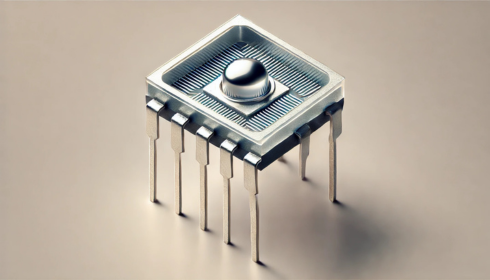
In today’s world of electronics and automation, even simple components can unlock surprisingly powerful applications. Two such components — the ldr sensor — are widely used in everything from school science projects to industrial automation systems. If you’ve ever built a light-based circuit or tried to control a motor’s speed, chances are you’ve come across these terms.
Let’s break things down in a way that actually makes sense, without sounding like a textbook.
What is an LDR Sensor?
An LDR (Light Dependent Resistor) is one of those components that reacts to its surroundings. Specifically, it changes its resistance based on the amount of light falling on it. Sounds simple — and it is.
When the light intensity is high, the resistance of the LDR drops. In darkness, resistance increases significantly. This property makes it ideal for applications like automatic street lights, night lamps, or even solar tracking systems.
The beauty of an LDR is that it doesn’t require complex programming to work. Even a basic circuit with a resistor and power supply can demonstrate its behavior. That’s why it’s often used in beginner-level electronics experiments.
How LDR Sensors Are Used in Real Life
You might not notice it, but LDRs are quietly working around you. Ever seen street lights turning on automatically at dusk? That’s a classic use case.
In homes, LDRs can be used in smart lighting systems where lights adjust based on ambient brightness. In security systems, they can detect sudden changes in light — for example, if someone opens a door in a dark room.
Even in agriculture, LDR-based systems help monitor sunlight exposure for plants. Not bad for a small, inexpensive component, right?
What is a Motor Controller?
Now let’s switch gears a bit. A motor controller is essentially a device or circuit that manages the operation of an electric motor. It controls things like speed, direction, and sometimes even torque.
Think of it like a middleman between the power source and the motor. Instead of sending raw power directly, the controller regulates how much power goes through and in what way.
Without a motor controller, motors would either run at full speed or not at all — not exactly practical for most applications.
Types of Motor Controllers
Motor controllers come in different types depending on the motor and use case. For instance, DC motor controllers are common in small robotics and DIY projects, while AC motor controllers are used in industrial machinery.
There are also advanced controllers like PWM (Pulse Width Modulation) controllers that adjust speed efficiently without wasting energy. These are widely used in fans, electric vehicles, and automation systems.
In robotics, motor controllers are essential because they allow precise movements — turning, stopping, reversing — all controlled through a microcontroller like Arduino.
Combining LDR Sensor and Motor Controller
Here’s where things get interesting. When you combine an LDR sensor with a motor controller, you can create smart systems that respond to light automatically.
For example, imagine a solar panel that rotates to face the sun throughout the day. The LDR detects the direction of maximum light, and the motor controller adjusts the motor accordingly. This setup improves energy efficiency without manual intervention.
Another example could be automatic window blinds. When sunlight becomes too intense, the LDR detects it and triggers the motor to close the blinds. Simple idea, but quite effective.
Why These Components Matter
At first glance, both components may seem basic. But together, they represent the foundation of automation and smart systems.
They’re affordable, easy to use, and flexible enough for countless applications. Whether you’re a student building a science project or someone exploring DIY electronics, understanding these components opens up a lot of possibilities.
Final Thoughts
Learning about LDR sensors and motor controllers isn’t just about theory — it’s about seeing how small ideas turn into real-world solutions. Once you start experimenting, you’ll realize how adaptable these components are.
And honestly, that’s where the fun begins — not just understanding how they work, but figuring out what you can build with them next.