
There’s something oddly comforting about turning on a faucet and watching water flow out, crystal clear. It looks clean. It feels clean. But in the world of manufacturing, pharmaceuticals, laboratories, and food processing, looking clean simply doesn’t cut it. That’s where things get a bit more complex — and a lot more precise.
Let’s talk about the unsung hero behind many of today’s most sensitive and quality-driven industries: high-purity water solutions.
When Water Just Isn’t Good Enough
In everyday life, we’re okay with a bit of calcium in our water. Maybe even some sodium, iron, or trace minerals. But certain processes — like semiconductor fabrication, injectable drug production, or running an autoclave — can’t tolerate even the slightest impurity.
That’s not nitpicking. That’s science.
A single stray ion or dissolved mineral can throw off delicate chemical reactions or introduce contaminants into supposedly sterile environments. If you’re manufacturing solar panels or bottling IV fluids, regular water just won’t cut it.
This is where water purification becomes less about taste or odor — and more about chemistry at the molecular level.
What Deionization Actually Means
Let’s clear up a common confusion: Deionized water is not distilled. It’s also not just filtered. It’s been stripped — surgically, almost — of ions.
Ions are charged particles that float around in water. Some are good (think magnesium or potassium in drinking water), but most are problematic when it comes to precision tasks. So, how do we get rid of them?
Enter the science of ion exchange — a process that swaps unwanted dissolved ions with hydrogen and hydroxide ions, which then combine to form… you guessed it: pure H₂O.
It’s efficient. It’s effective. And it’s why commercial water deionization systems are increasingly vital across countless sectors.
Not Just for Labs Anymore
It used to be that deionized water was the domain of scientists in lab coats — pipetting carefully, monitoring every variable. But now, the reach of ultra-pure water has expanded dramatically.
Craft breweries use it to avoid flavor inconsistencies. Automotive manufacturers use it in battery production. Data centers depend on it for cooling systems. Even cosmetics brands lean on DI water to maintain product purity.
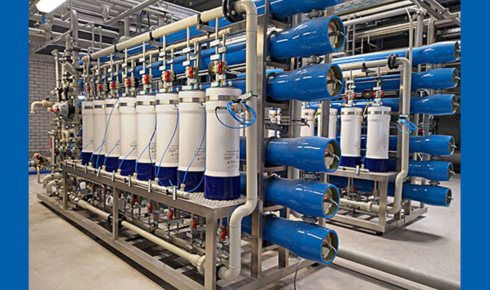
The scalability of these systems has grown to match their demand, meaning facilities of all sizes — not just massive industrial plants — can now access commercial water deionization systems tailored to their needs.
And these systems? They’re not clunky, single-use units anymore. Today’s setups are smart, automated, and capable of real-time monitoring, which minimizes downtime and boosts operational efficiency.
But Wait, What’s the Catch?
Here’s the thing about water this pure: it’s fragile.
That sounds odd, but bear with me. Once you strip water of all its ions, it becomes like a sponge. The moment it contacts air, pipes, or even your skin, it starts grabbing ions again. In fact, if you store it incorrectly, it will “go bad” by reabsorbing minerals from its environment.
This is why remove dissolved ions efforts can’t be a one-time event. It’s a process — one that requires a controlled ecosystem from purification to point-of-use.
That’s why many systems today are built with closed loops, sterile fittings, and UV sanitization — to ensure that the water remains as pure at delivery as it was at output.
More Than Just Purity: It’s About Consistency
Beyond just hitting purity benchmarks, companies want consistency. The goal isn’t just one batch of perfectly clean water — it’s every batch. And that’s where system design becomes crucial.
Think of it like tuning a guitar. Anyone can pluck a string, but keeping all six strings perfectly tuned over hours of play? That’s the hard part.
Same goes for water systems.
A well-designed deionization setup isn’t just about filters and resins. It’s about flow rate, regeneration timing, microbial control, and pressure balance. Inconsistent water quality can be just as damaging as outright contamination.
Sustainability Enters the Chat
Now here’s the curveball. For years, high-purity water systems had a bit of a waste problem. The ion exchange process can produce wastewater, and resin regeneration often required chemicals like sodium hydroxide or hydrochloric acid.
But newer technologies have stepped in with a greener footprint. Closed-loop systems now recycle rinse water. Some use electrodeionization (EDI), which combines ion exchange with electricity to regenerate continuously — no chemicals required.
As demand rises for high-purity water solutions in eco-conscious industries, innovation has kept pace. We’re now seeing purification systems that are as environmentally smart as they are scientifically precise.
Is It Worth the Investment?
Look — not every business needs ultra-pure water. But if precision, sterility, or quality control are even remotely part of your operation, you’d be surprised how much impact water purity has on your bottom line.
It’s not just about avoiding contamination — it’s about process efficiency, equipment longevity, and meeting regulatory standards without sweating bullets.
And with modular systems available today, it doesn’t have to break the bank.
Final Thoughts: Purity with Purpose
At the end of the day, water is more than just H₂O. It’s a carrier, a solvent, a component, and sometimes, a risk. And while the average person can get by with “pretty clean,” the industries shaping our future — from biotech to aerospace — demand better.
That’s what remove dissolved ions efforts are all about. Not vanity. Not over-engineering. Just pure functionality, quite literally.
Because when it comes to crafting the products, technology, and treatments that define tomorrow — only the purest water will do.